How to Hire a Dedicated Development Team in 2026: Cost, Process, and Red Flags
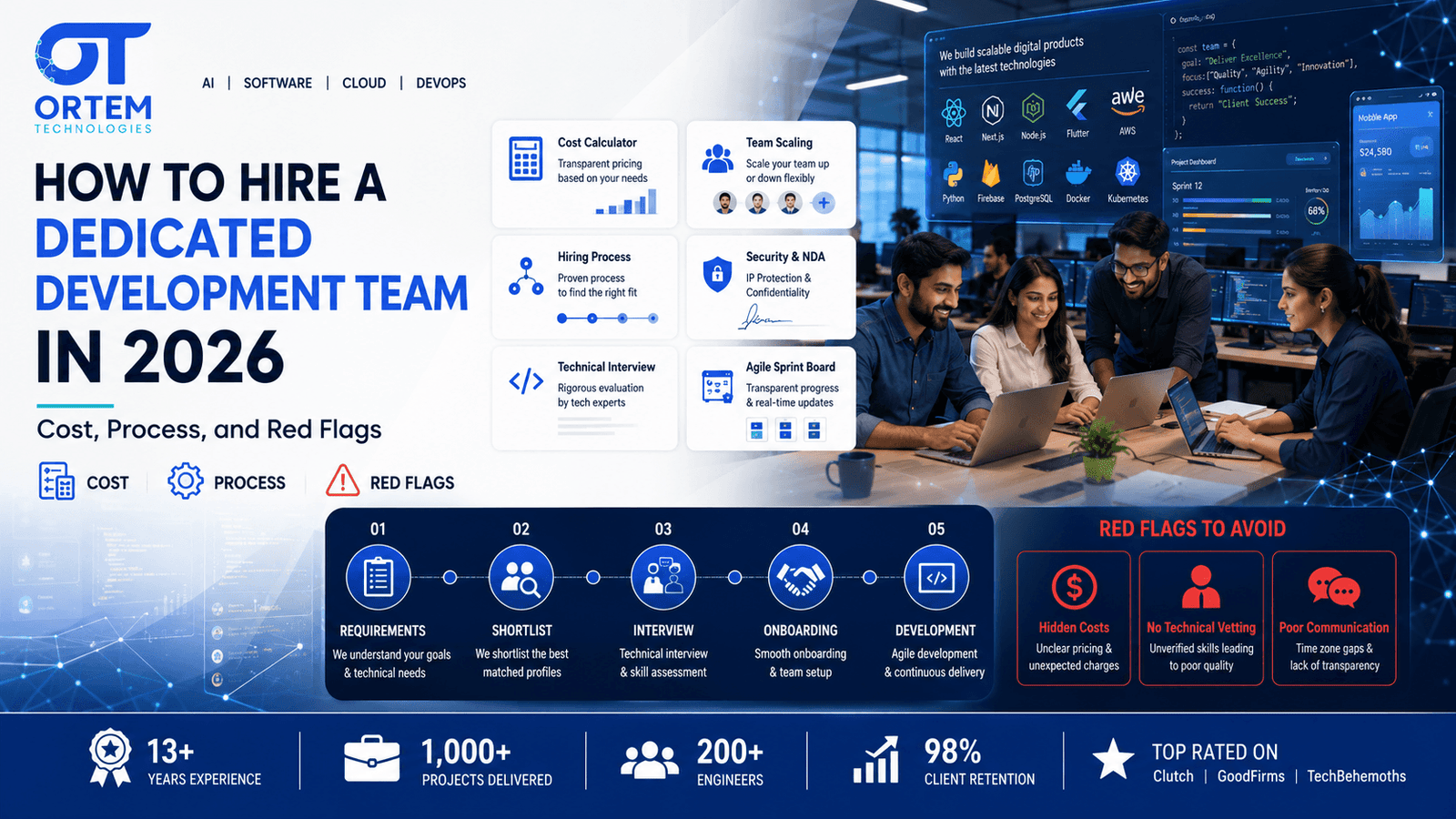
A dedicated development team is a self-managed pod — typically a tech lead, 2-5 engineers, and a QA specialist — that works exclusively on your product for a fixed monthly retainer, usually $18,000-$35,000/month depending on seniority and specialization. Unlike staff augmentation, the pod owns delivery: it runs its own sprints and backlog rather than slotting individuals into a process you manage. The hiring process typically takes 7-14 business days from first call to a working team, and the biggest red flag to watch for is a vendor who cannot show you the named engineers before you sign — that usually means you are hiring a recruiting funnel, not a team.
A dedicated development team is a self-managed group of engineers assembled to work exclusively on one client's product for the duration of an engagement, billed as a fixed monthly retainer rather than per-project or per-hour. It differs from staff augmentation (individual engineers added to your existing team and process) and project outsourcing (a fixed-scope build with a defined end date) by combining ownership of delivery with an open-ended, product-length commitment.
Commercial Expertise
Need help with Software Development?
Ortem deploys dedicated Custom Software Development squads in 72 hours.
Next Best Reads
Continue your research on Software Development
These links are chosen to move readers from general education into service understanding, proof, and buying-context pages.
Custom Software Development
Build exactly what you need — dashboards, platforms, SaaS, and internal tools with dedicated squads.
Explore software serviceMVP Development
Launch faster with a scoped MVP that proves your concept before full product investment.
See MVP serviceCustom Platform Case Study
Multi-tenant SaaS built with production-grade architecture, compliance, and operational scale.
Read case study"We'll get you a dedicated team" is one of the most overused phrases in software outsourcing, and it covers at least three genuinely different arrangements: a self-managed pod that owns delivery, individual engineers added to your team under your management, and a project shop that will build something fixed-scope and then disappear. Buyers who don't separate these get burned in predictable ways — usually by discovering, three sprints in, that "dedicated team" meant "you now manage five strangers."
Here's how to tell the difference, what it actually costs, and what to check before you sign.
What a dedicated development team actually is
A dedicated team is a pod — typically a tech lead, two to five developers, and a QA specialist — assembled to work exclusively on your product, billed as a fixed monthly retainer. The defining feature isn't the org chart, it's who owns delivery. In a real dedicated-team engagement, the pod runs its own sprint planning, manages its own backlog against your roadmap, and is accountable for shipping working software. You set product direction and priorities; they own how the work gets done.
That's the line that separates it from staff augmentation, where you add individual engineers into your existing team and process — you run the standups, assign the tickets, and own the technical decisions. Staff augmentation is the right call when you have an established engineering org and need to fill a specific capacity or skills gap. A dedicated team is the right call when you want a product built and don't have the internal bandwidth or expertise to manage that process yourself.
What it costs
A typical pod — one tech lead, three engineers, and part-time QA — runs $18,000-$35,000 per month, with the range driven mostly by seniority mix and specialization (AI/ML, security, and deep domain expertise sit at the top of that band). Compare that to the fully-loaded cost of hiring the equivalent team in-house in the US: salaries alone for a comparable pod typically run $45,000-$70,000/month before benefits (add 20-30%), recruiting fees (15-25% of first-year salary per hire), equity, and management overhead. Most clients land 40-60% lower on a dedicated team, with the added flexibility to scale down on 30 days' notice rather than face severance and legal exposure.
| Cost component | In-house pod (US) | Dedicated team |
|---|---|---|
| Base compensation | $45,000-$70,000/mo | Included in retainer |
| Benefits & overhead | +20-30% | Included |
| Recruiting cost | 15-25% of year-1 salary, per hire | None |
| Time to scale down | Severance, notice periods | 30 days |
| Time to scale up | 2-4 month recruiting cycle | ~1 week |
The hiring process, honestly
A legitimate provider can take you from first call to a working team in 7-14 business days. The sequence that should happen:
- Scoping call. You describe the product and the skills you need; a good provider asks pointed questions about your stack, timeline, and what "done" looks like for the first milestone.
- Proposed pod composition — with names. This is the step where bad providers get exposed. You should receive actual engineer profiles — background, past project types, assessment or test results — not a promise to "start sourcing" after you sign.
- Optional technical interview or trial task. If you want to validate the tech lead or a key engineer directly, a real provider accommodates this without friction.
- Contract and kickoff. IP assignment should be explicit and immediate — every line of code belongs to you from day one, not upon final payment.
- Onboarding sprint. The pod gets oriented in your codebase, tooling, and communication norms before full-speed sprints begin.
If any provider wants you to sign before step 2, that's the first red flag.
Six red flags that mean you're hiring a body shop
1. No named engineers before signature. If the pitch is "we have 500 developers in our bench" rather than "here are the three engineers we're proposing for your pod," you're buying a recruiting funnel, not a team.
2. Hourly billing with no monthly ceiling. The entire point of a dedicated-team retainer is cost predictability. If pricing reverts to open hourly billing, you've lost the model's core advantage and are effectively paying staff-aug rates for less accountability.
3. No single accountable owner. Ask directly: who is responsible if a sprint slips? A real dedicated-team provider names a person — usually the tech lead — not a rotating account manager who relays messages.
4. Vague or delayed IP assignment. Read the contract for explicit, immediate IP transfer language. "Upon final payment" or "upon project completion" clauses can leave work-in-progress in legal limbo if the relationship ends early.
5. No checkable references. Ask for a client you can actually call — not a testimonial quote, a real conversation. Providers with genuine long-term dedicated-team clients will connect you.
6. Team composition changes without consent. Some churn is normal over a multi-month engagement, but if your tech lead or majority of engineers change in the first 90 days without your explicit sign-off, that's a sign the pod was never really "dedicated" to you specifically.
When to choose a dedicated team vs. the alternatives
Choose a dedicated team when you want a product owned end-to-end and don't have internal capacity to manage day-to-day engineering decisions. Choose staff augmentation when you have an established team and process, and just need more hands with the right skills. Choose project outsourcing (full scoped delivery) when the work has a defined finish line and you don't need an ongoing team relationship afterward. We've also written a detailed comparison of the dedicated-team model against freelance marketplace platforms like Toptal and AI-matched talent marketplaces like Turing, since the "just hire one engineer" pitch from those platforms solves a different problem than product ownership.
The bottom line
The dedicated-team model is genuinely good when you need a pod that thinks about your product continuously rather than executing a ticket queue — but the category gets diluted by providers using the label to sell staff augmentation or worse. The test before signing is simple: can they show you the actual people, with names and backgrounds, before your money moves? If yes, you're likely looking at a real dedicated team. If the answer is "we'll find the right fit after onboarding," you're not.
We assemble named, pre-vetted pods for clients from seed-stage to enterprise — see our dedicated development team service, or book a free consultation to see the actual engineer profiles we'd propose for your product, not a promise to go find them.
About Ortem Technologies
Ortem Technologies is a premier custom software, mobile app, and AI development company. We serve enterprise and startup clients across the USA, UK, Australia, Canada, and the Middle East. Our cross-industry expertise spans fintech, healthcare, and logistics, enabling us to deliver scalable, secure, and innovative digital solutions worldwide.
Get the Ortem Tech Digest
Monthly insights on AI, mobile, and software strategy - straight to your inbox. No spam, ever.
Sources & References
- 1.Dedicated Development Team Services - Ortem Technologies
- 2.Staff Augmentation Services - Ortem Technologies
About the Author
Director – AI Product Strategy, Development, Sales & Business Development, Ortem Technologies
Praveen Jha is the Director of AI Product Strategy, Development, Sales & Business Development at Ortem Technologies. With deep expertise in technology consulting and enterprise sales, he helps businesses identify the right digital transformation strategies - from mobile and AI solutions to cloud-native platforms. He writes about technology adoption, business growth, and building software partnerships that deliver real ROI.
Frequently Asked Questions
- A dedicated team is a self-managed pod that owns delivery — it runs its own sprints, manages its own backlog, and is accountable for shipping, while you set product direction. Staff augmentation adds individual engineers into your existing team and process — you manage their day-to-day work, assign tickets, and run the standups. Dedicated teams suit a product you want owned end-to-end; staff augmentation suits filling a specific skills or capacity gap inside a team you already run.
- A typical pod — one tech lead, three engineers, and part-time QA — runs $18,000-$35,000 per month depending on seniority mix and specialization (AI/ML and security specialists command the top of that range). That is generally 40-60% below the fully-loaded cost of hiring the same team in-house in the US once you include salaries, benefits, recruiting fees, and management overhead.
- From an initial scoping call to a fully onboarded team writing code is typically 7-14 business days with an established provider. That includes proposing a pod composition with named engineers and their assessment results, a technical interview or trial task if you want one, and a kickoff sprint to get the team oriented in your codebase and tooling.
- Six recurring red flags: (1) they cannot show you named engineers before contract signature, only "profiles we will source"; (2) pricing is quoted per-hour with no monthly cap, which defeats the predictability a dedicated team is supposed to provide; (3) no named point of contact accountable for delivery outcomes, just a rotating account manager; (4) the contract does not assign IP to you explicitly and immediately; (5) they cannot produce a reference client you can actually call; (6) the team composition changes in the first 90 days without your sign-off.
- Yes, with a reputable provider — this is one of the model's real advantages over hiring in-house. Adding a senior engineer typically takes about a week; scaling down usually requires 30 days notice after an initial minimum term (commonly 3 months). Compare that to the multi-month recruiting cycle to add an in-house hire, or the severance and legal exposure to remove one.
Stay Ahead
Get engineering insights in your inbox
Practical guides on software development, AI, and cloud. No fluff — published when it's worth your time.
Ready to Start Your Project?
Let Ortem Technologies help you build innovative software solutions for your business.
You Might Also Like
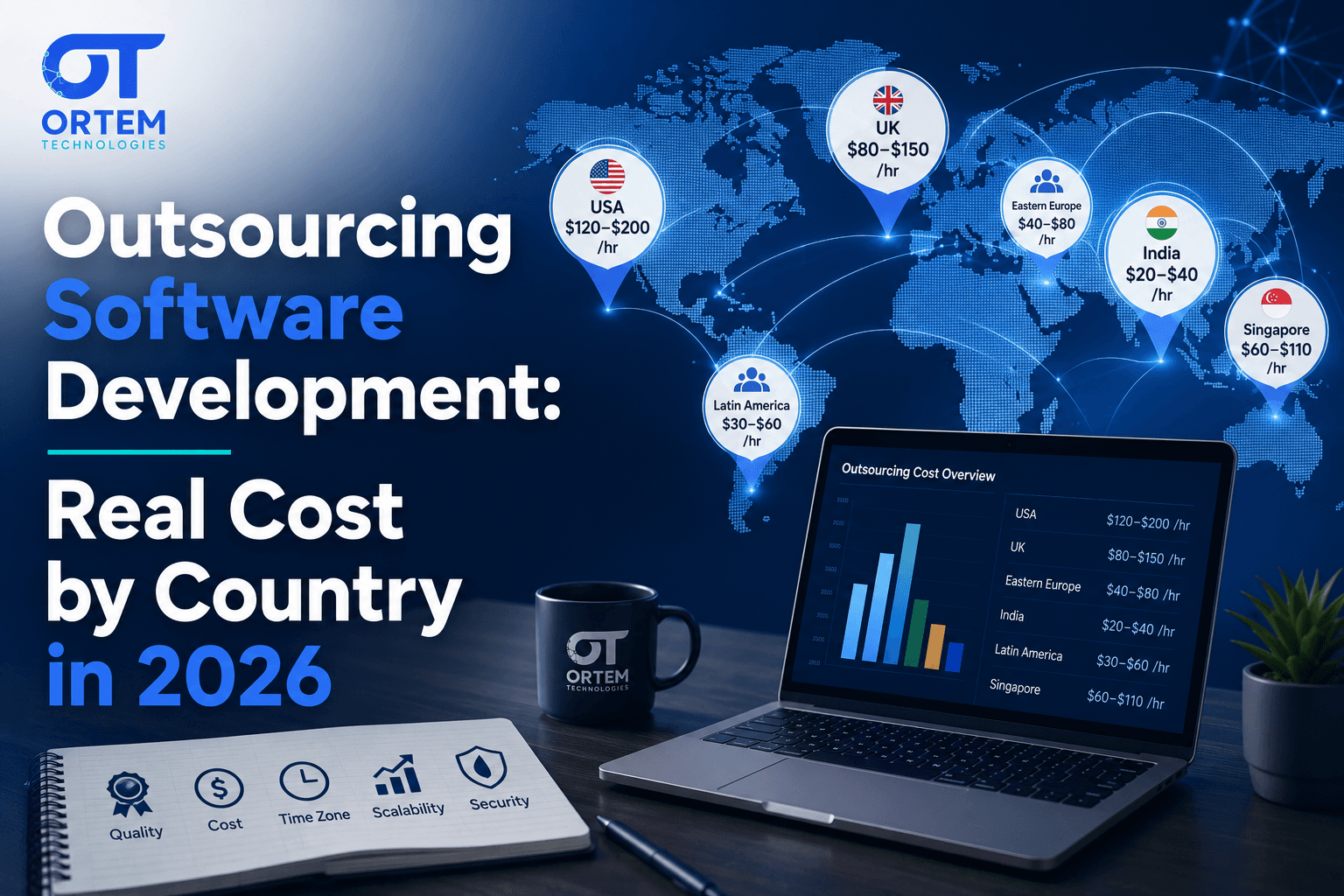
Outsourcing Software Development: Real Cost by Country in 2026
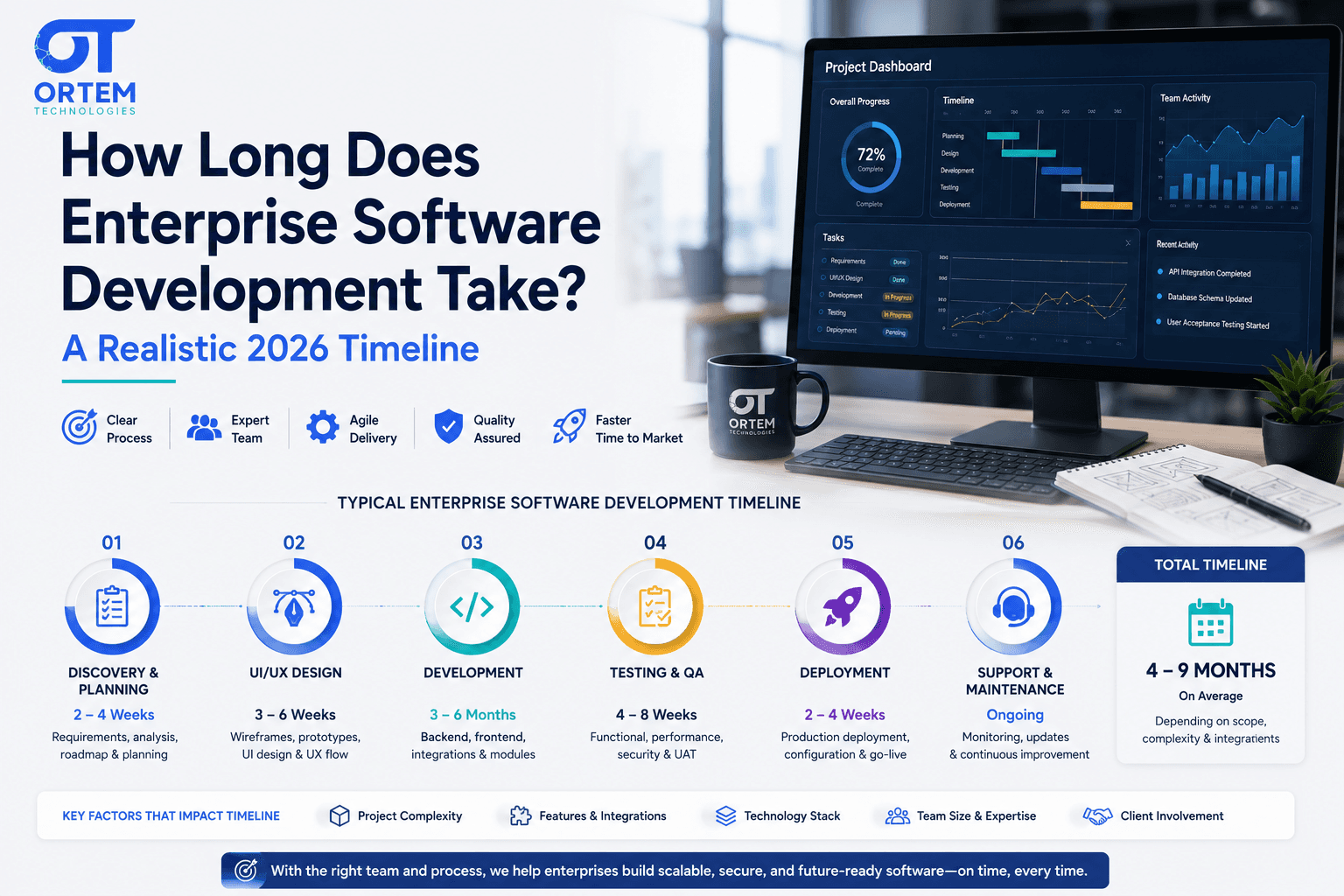
How Long Does Enterprise Software Development Take? A Realistic 2026 Timeline